Last Updated Jun - 13 - 2024, 04:34 PM | Source : Education Times | Visitors : 116
IIT Madras introduces the BTech in AI & Data Analytics (AIDA) program, emphasizing key outcomes such as mathematical foundations, ML/AI models, programming skil
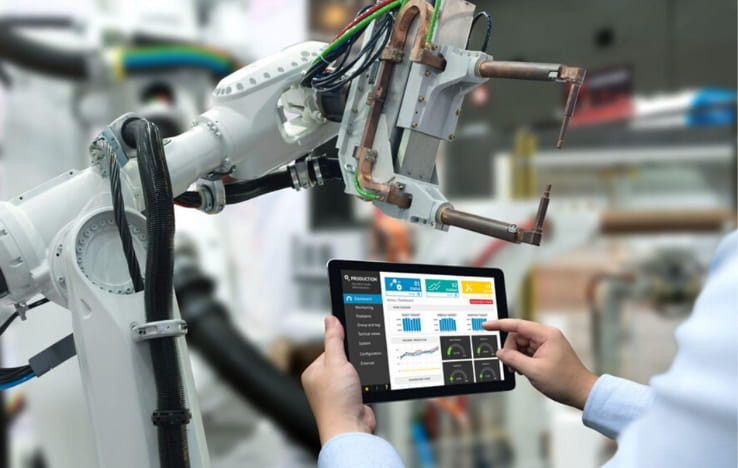
IIT Madras has launched the BTech in AI & Data Analytics (AIDA) programme to provide students with the crucial skills and knowledge they need to thrive in today’s dynamic technological ecosystem. This study is aimed to develop skills in a variety of AI and data analytics areas, providing a comprehensive overview of their applications across sectors.
At the heart of AIDA lie nine key outcomes, each serving as a pillar upon which students will build their proficiency: These include:
Mathematical foundations: enabling students to delve deep into the mathematical underpinnings of data science and artificial intelligence, laying a robust groundwork for advanced analysis and modelling.
ML/AI models: Inviting students to explore a spectrum of models, ranging from mathematical and statistical to network architectures, empowering students to develop sophisticated solutions to complex problems.
Learning algorithms and statistical inference: the art of algorithmic design and statistical inference, essential for extracting meaningful insights from vast datasets.
Programming skills: Hone programming skills tailored for crafting cutting-edge data science and AI solutions, leveraging the latest tools and languages.
Data Acquisition and Pre-processing: Learning the intricacies of acquiring, pre-processing, and curating data is essential for ensuring its quality and relevance in analytical endeavours.
Systems thinking: Cultivate a systems thinking mindset crucial for deploying machine learning solutions effectively within real-world contexts.
Mathematical Modelling and simulation: Harnessing the power of mathematical modelling, computational methods, and simulation techniques to simulate and analyse complex systems.
Application to real-world problems: Apply data analytics and AI techniques to tackle real-world challenges across diverse domains, fostering innovation and impact.
Fair and responsible AI: Embrace the principles of fairness and responsibility in AI development, ensuring ethical and equitable deployment of technology.
Students will be allowed to tailor their learning journey through a wide range of electives from within the department and outside. From delving into the intricacies of Speech & Language Technology and Computer Vision to exploring Applications in Control & Detection and Time-Series Analysis, students have the opportunity to explore areas of personal passion and interest.
The detailed curriculum includes topics such as foundations of linear algebra, calculus for engineers, programming and data structures, programming laboratory, basics of engineering principles, ecology and environment, Computational Methods for DS, Algorithms for Data Science, Artificial Intelligence, Machine Learning II, Deep Learning among others.
Stay ahead with educational updates! Join our WhatsApp channel now for the latest insights and knowledge boosts. Don’t miss out, join today!
READ MORE| CSIR-HRDC Inks MoUs with Four Sector Skill Councils

Jun - 12
A LinkedIn post about a Gen Z employee refusing to attend a 9 PM meeting has gone viral, sparking a fresh debate on work-life balance and workplace... Read More
Jun - 09
CUET UG 2026 Answer Key: The National Testing Agency (NTA) is expected to release the CUET UG 2026 provisional answer key soon on its official webs... Read More

Jun - 09
JEE Advanced 2026 results declared and counselling in progress, students are now deciding which engineering branch to choose for their future caree... Read More