Last Updated Nov - 22 - 2024, 05:23 PM | Source : News18 | Visitors : 1996
Learn about the prestigious Aide-de-Camp (ADC) role to the President of India, its responsibilities, selection process, and the qualifications required for this
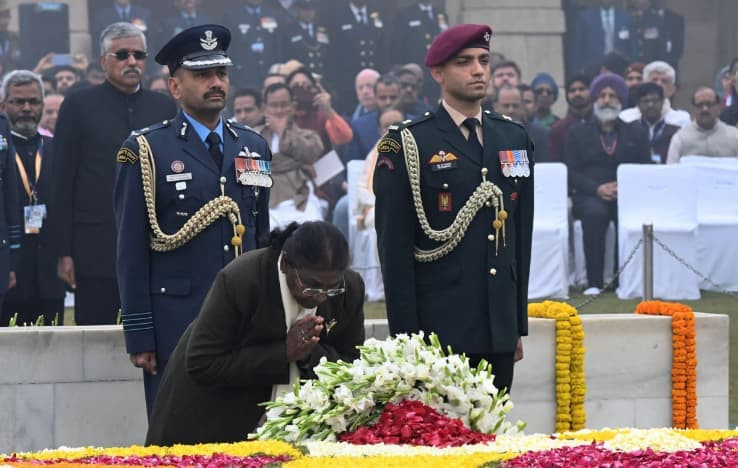
The post of Aide-de-camp (ADC) to the President of India is a highly regarded position in the Indian Armed Forces. ADCs support the President with both personal and administrative concerns, ensuring that his office runs well.
They serve as a vital link between the President and numerous government ministries. Senior commanders in India, such as Major Generals and their counterparts in the Navy and Air Force, are typically accompanied by aides-de-camp (ADCs) drawn from their own units.
The service chiefs of the Army, Navy, and Air Force each have three ADCs. The president of India is backed by five ADCs, three from the Army, one from the Navy, and one from the Air Force, along with one honorary ADC from the Territorial Army.
The president can also appoint special honorary ADCs, including senior officers like the service chiefs.
However, the selection of ADCs is an internal process within the armed forces. Candidates who are chosen are usually young, highly skilled officers who are strictly examined across various parameters. The final selection is concluded by an interview process. Hence, if any candidate aspires to be an ADC, then he or she must join the armed forces.
The roles and responsibilities associated with an ADC are:
Eligibility criteria:
Selection process:
READ MORE| NITI Aayog Report: Over 50% Primary Schools in Several States Have Enrollments Below 60%

Jun - 12
A LinkedIn post about a Gen Z employee refusing to attend a 9 PM meeting has gone viral, sparking a fresh debate on work-life balance and workplace... Read More

Jun - 09
CUET UG 2026 Answer Key: The National Testing Agency (NTA) is expected to release the CUET UG 2026 provisional answer key soon on its official webs... Read More

Jun - 09
JEE Advanced 2026 results declared and counselling in progress, students are now deciding which engineering branch to choose for their future caree... Read More