Last Updated Jan - 24 - 2026, 05:54 PM | Source : Fela News | Visitors : 61
Government urges structured reforms and teacher training to strengthen inclusive education for children nationwide.
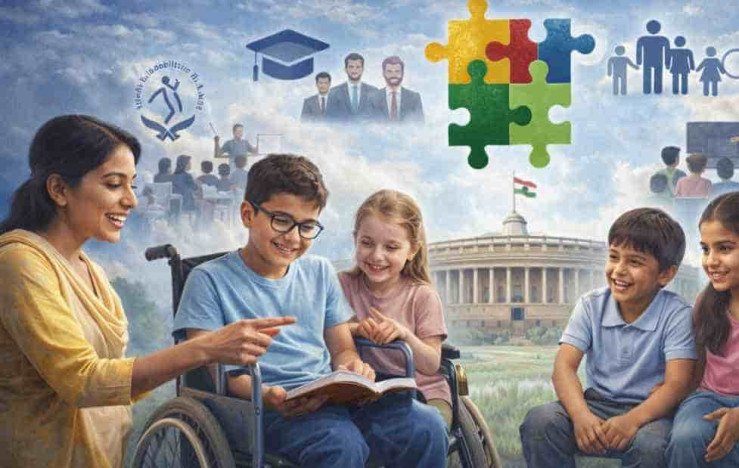
India’s education system is moving toward a more inclusive future as the Union Ministry of Education has called for a comprehensive, systemic approach to support children with special needs across the country.
Speaking at a national summit on inclusive education in New Delhi, senior officials emphasized that inclusion must go beyond policy declarations and become an institutional responsibility embedded within schools, teacher training systems, and administrative frameworks.
The ministry highlighted that many inclusive initiatives currently depend heavily on individual efforts by educators or parents. A structured national framework, officials said, would ensure consistency, accountability, and long-term impact.
One of the major announcements from the summit was a five-day national training programme for general teachers. The programme includes eight specialized modules designed to help educators identify learning challenges, adopt inclusive teaching strategies, and provide classroom-level support for children with diverse needs.
States have been encouraged to nominate master trainers who will further train teachers at district and block levels, enabling nationwide implementation.
Several states presented successful models during the summit. Andhra Pradesh showcased its autism support centres, with plans to expand the network to 125 facilities. Haryana and West Bengal shared school-level inclusion practices that have improved learning outcomes for children with disabilities.
The Rehabilitation Council of India also outlined steps to expand professional training programmes for special educators. Officials acknowledged that a shortage of trained personnel remains one of the biggest barriers to effective inclusion.
Experts attending the summit stressed that meaningful inclusive education requires coordination between schools, families, healthcare professionals, and government bodies. Collaboration, they said, is essential for creating supportive learning environments.
The ministry’s long-term goal is to ensure that inclusive education becomes the norm rather than the exception. By strengthening institutional systems, teacher capacity, and state-level execution, India aims to build an education ecosystem where every child receives equal opportunity to learn, grow, and succeed.

Jun - 12
A LinkedIn post about a Gen Z employee refusing to attend a 9 PM meeting has gone viral, sparking a fresh debate on work-life balance and workplace... Read More

Jun - 09
CUET UG 2026 Answer Key: The National Testing Agency (NTA) is expected to release the CUET UG 2026 provisional answer key soon on its official webs... Read More
Jun - 09
JEE Advanced 2026 results declared and counselling in progress, students are now deciding which engineering branch to choose for their future caree... Read More