Last Updated Jan - 29 - 2026, 03:13 PM | Source : Fela News | Visitors : 77
Supreme Court pauses new UGC anti discrimination rules and asks Centre to rewrite clearer guidelines.
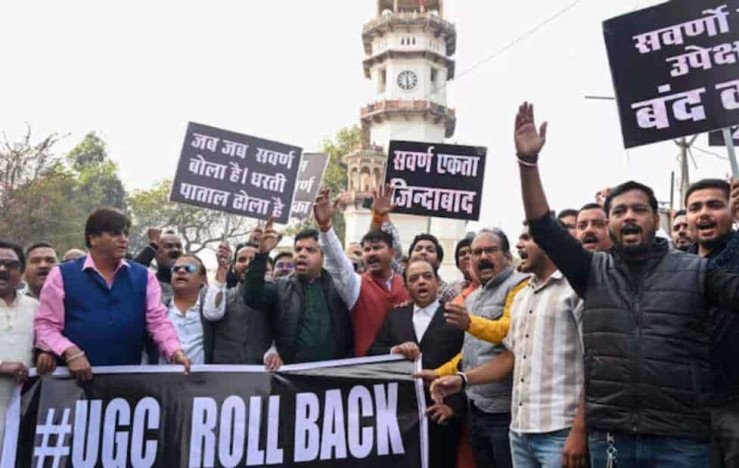
India’s highest court has temporarily halted the implementation of the new equity regulations introduced by the University Grants Commission in 2026. The decision came after several petitions challenged the rules, raising concerns about clarity fairness and possible misuse. The Supreme Court directed the central government and the UGC to review the guidelines and prepare a clearer revised version.
The equity regulations were designed to strengthen mechanisms that address discrimination in colleges and universities. Under the framework institutions were required to create equal opportunity cells equity committees grievance systems and round the clock helplines. These measures were intended to ensure safer and more inclusive learning environments across the country.
However soon after their notification the rules faced strong opposition from students teachers and social groups. Many argued that key definitions were vague and open to interpretation. Critics feared the absence of clear boundaries could lead to confusion uneven implementation and unfair targeting of certain groups.
Several petitions claimed the regulations may conflict with constitutional principles of equality. Students from different backgrounds expressed concern that the rules did not provide balanced protection to all categories. As protests grew nationwide the matter reached the Supreme Court for urgent consideration.
During the hearing the court observed that the wording of the regulations lacked precision. The judges noted that unclear definitions could encourage misuse and create unnecessary conflict on campuses. To prevent further confusion the court ordered that the earlier 2012 anti discrimination guidelines would remain in effect until new rules are drafted.
The ruling triggered mixed reactions. Some student groups said the stay weakened efforts to protect vulnerable communities from discrimination. Others welcomed the order stating that fairness transparency and constitutional balance are essential in policies that affect millions of students.
The central government maintained that the intention behind the regulations was to promote inclusion not division. Officials acknowledged that clearer drafting could improve understanding and public trust. The education ministry indicated it would work on revisions and present an improved framework after wider consultation.
For now universities will continue following the older regulations. Administrators students and faculty members are closely watching how the revised guidelines will be shaped. The episode highlights the complexity of designing policies that ensure equality while maintaining clarity and fairness for every section of society.

Jun - 12
A LinkedIn post about a Gen Z employee refusing to attend a 9 PM meeting has gone viral, sparking a fresh debate on work-life balance and workplace... Read More
Jun - 09
CUET UG 2026 Answer Key: The National Testing Agency (NTA) is expected to release the CUET UG 2026 provisional answer key soon on its official webs... Read More

Jun - 09
JEE Advanced 2026 results declared and counselling in progress, students are now deciding which engineering branch to choose for their future caree... Read More